
Exhibits
The exhibits at the Eternal Gandhi Museum Houston invite visitors on a carefully designed journey—from understanding the challenges facing humanity, to exploring the life and philosophy of Mahatma Gandhi, and finally to personal reflection and action. The museum experience unfolds across interconnected galleries that guide visitors from history to relevance to responsibility.
Museum Exhibit
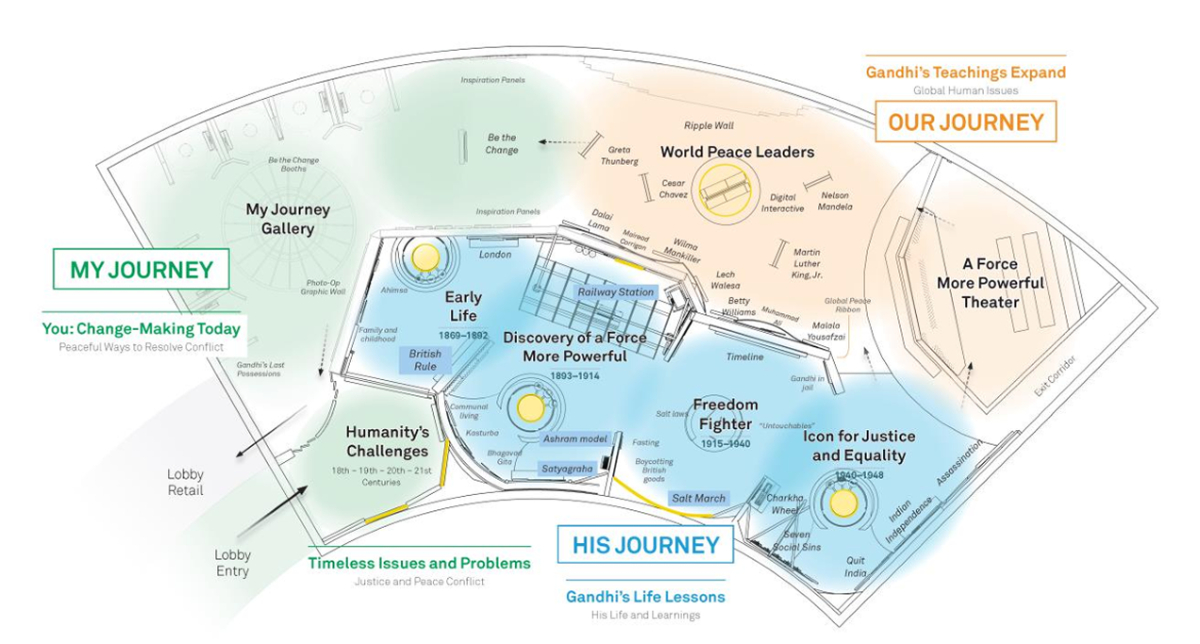
The museum is organized as a continuous narrative experience consisting of three primary exhibits—His Journey, Our Journey, and My Journey—supported by an immersive theater and reflection spaces. The diagram below illustrates the overall exhibit layout and visitor flow.
01: His Journey
Gandhi’s Life and Lessons
This gallery traces the transformation of Mohandas Karamchand Gandhi from his early life to his emergence as a global leader of nonviolent resistance.
Visitors explore Gandhi’s formative years, family influences, and early moral foundations, followed by his awakening to injustice during his years in South Africa. The recreated railway station scene represents the pivotal moment that led to the birth of Satyagraha—nonviolent civil resistance grounded in truth.
The journey continues through Gandhi’s return to India and leadership in the freedom movement, highlighting key moments such as the Salt March, life in the ashram, fasting as moral protest, and his advocacy for justice and equality for all.
A Force More Powerful Theater
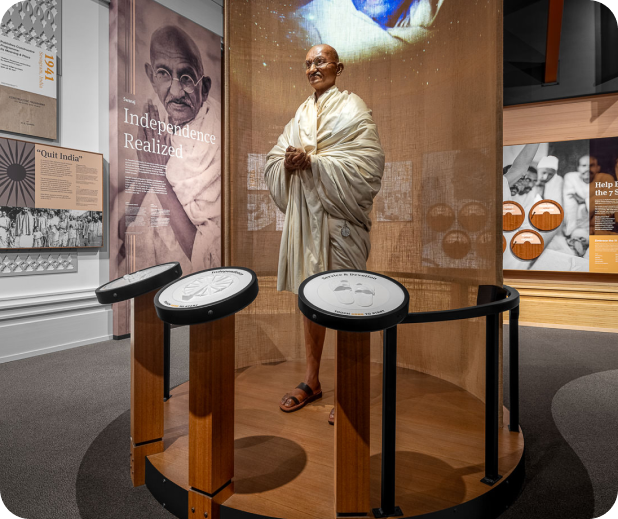
At the conclusion of His Journey, visitors enter the A Force More Powerful Theater. This immersive film experience demonstrates how Gandhi’s philosophy influenced global movements for civil rights, freedom, and social justice, preparing visitors to explore Gandhi’s worldwide legacy.
02: Our Journey
Global Peace Leaders
This gallery expands Gandhi’s teachings beyond his lifetime by highlighting global leaders and movements inspired by his philosophy. Featured figures include Martin Luther King, Jr., Nelson Mandela, César Chávez, Betty Williams, Mairead Corrigan, Lech Wałęsa, Kailash Satyarthi, Malala Yousafzai, and Greta Thunberg.
The Ripple Wall emphasizes how individual acts of conscience can create far-reaching impact, reinforcing the idea that nonviolence remains relevant to contemporary global challenges.
03: My Journey
Reflection and Commitment
The final gallery invites visitors to reflect on their own lives and consider how the values of truth, nonviolence, peace, and service can be practiced today.
Interactive stations and reflection prompts encourage visitors to identify personal commitments and recognize their role as change-makers within their communities.
Exhibits as a Living Experience
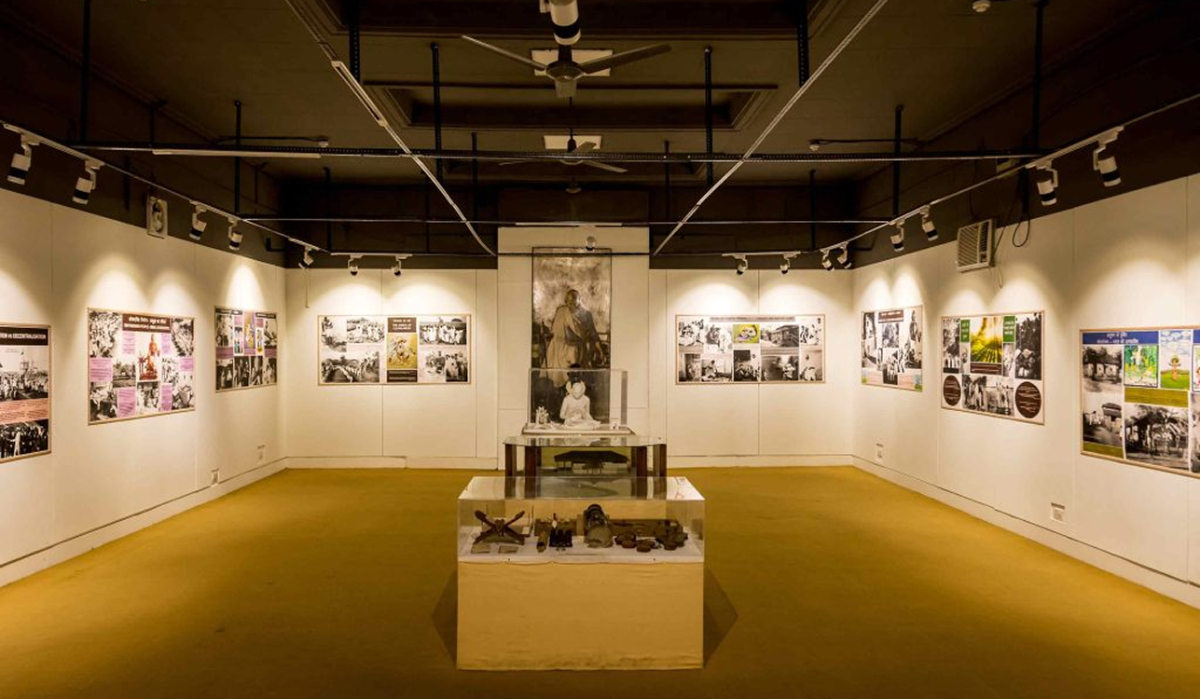
The exhibits support self-guided exploration, docent-led tours, and educational programs. Visitors may also enhance their experience through the museum’s Digital Guide, which provides additional context, audio narration, and interpretive insights.
Together, the exhibits affirm that nonviolence is not confined to history—it is a disciplined, courageous way of engaging with the world today.